
Franklin County Warrant Searches
A warrant check runs in steps, not one form. Georgia's guidance says to pick the county first, then have a first name, last name, and birth date ready. The Georgia warrant guide walks through it; Franklin County itself posts no Sheriff search screen.
- Identify whether the concern arose from a criminal complaint, traffic ticket, missed hearing, or city case.
- Call the Sheriff at 706-384-2525 and ask what staff can confirm.
- Contact Magistrate Court at 706-384-7473, Probate at 706-384-2403, or the Superior clerk at 706-384-2514 as needed.
- For a city matter, contact that municipal clerk or City Hall.
- Use a focused records request when direct contact cannot answer the question, then verify with the issuing court.
Phone first, visit second. Georgia cautions that an office can insist on an in-person request, and a person with an active warrant may be taken into custody on the spot. In a serious Franklin County case, let counsel make the first inquiry.
No Franklin County Warrant Portal
The Sheriff page covers patrol, investigations, jail operations, court security, and civil process. It lists no warrant form and no active warrant roster. A blank web result, then, says nothing about current status.
Quick answer: Use the Sheriff's published number and the court that handled the case. Do not substitute an unofficial list.
The county also lists no separate warrant-unit phone line and promises no full warrant disclosure by telephone.
What a Warrant Search Asks For
These are preparation fields, not proof of any Franklin County database. State guidance names the first four items. Case details simply help a clerk route the warrant inquiry and tell one matter from another.
| Field | Type | Need | Purpose |
|---|---|---|---|
| First name | Text | State guide | Identify the subject |
| Last name | Text | State guide | Start the check |
| Birth date | Date | State guide | Reduce mismatches |
| County | Place | State guide | Reach the right sheriff |
| Case or citation | Identifier | If known | Locate the court file |
No official Franklin source publishes alias logic, sorting, exports, or a local warrant-number format.
Georgia Systems and Franklin County Warrants
The Georgia Crime Information Center serves justice agencies through GCIC and CJIS. It is not a public Franklin County warrant lookup, and the official page draws that line plainly.
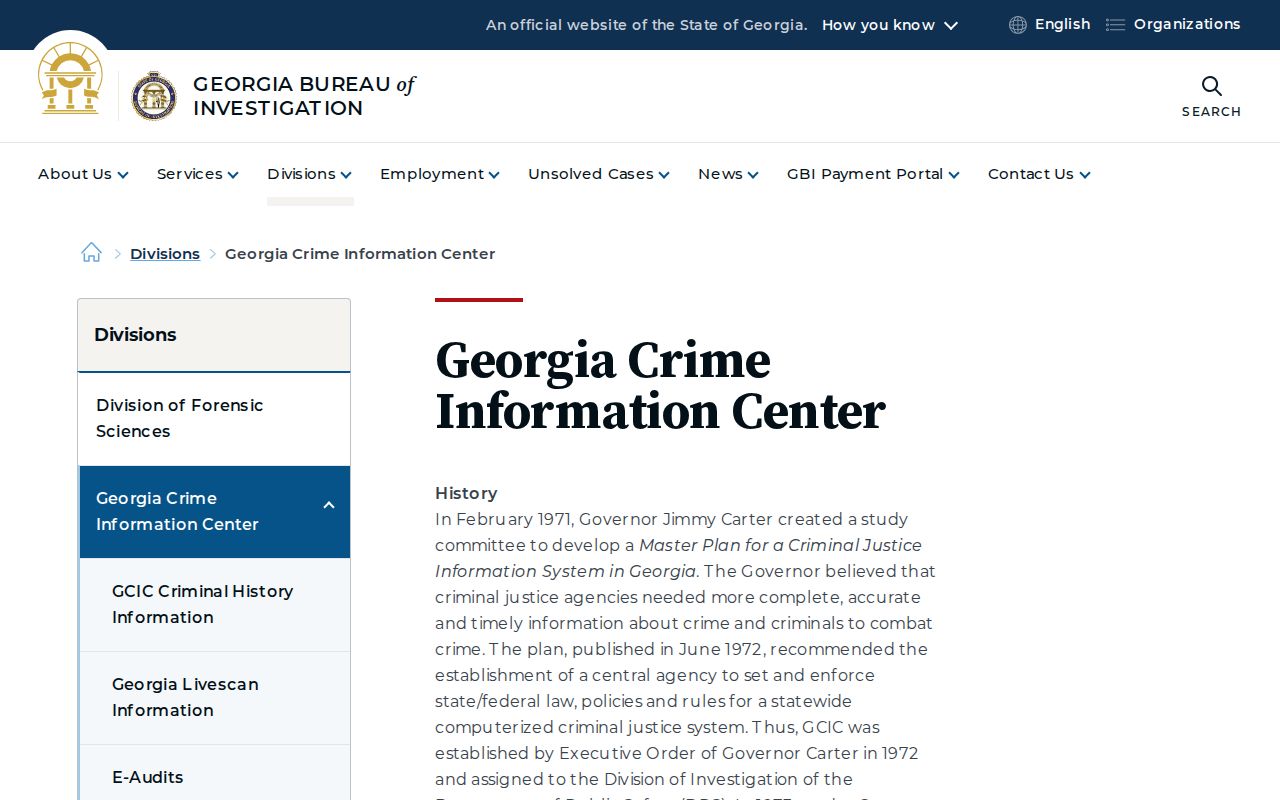
Residents work through the Franklin County Sheriff and the courts, not an agency network. Georgia also runs no centralized public traffic-citation database.
Franklin County Warrant Search Results
An official response may carry some of these fields. Franklin County publishes no sample entry, so the inventory shows what to ask for, not any real person's record.
| Warrant identifier | A local number if assigned; no Franklin format is published. |
|---|---|
| Case or citation | The court identifier, recorded as official number only. |
| Court and date | The venue controlling the file and issue date. |
| Type and reason | Arrest, bench, search, or traffic warrant and stated basis. |
| Bond | Amount, type, and terms only when set. |
| Status | Active, served, dismissed, recalled, quashed, returned, or cleared as defined by the office. |
Read status with a date. Court action may reach another system later.
Franklin County Warrant Court Routes
The Georgia court guide shows Superior, State, Juvenile, Probate, Magistrate, and Municipal trial courts.
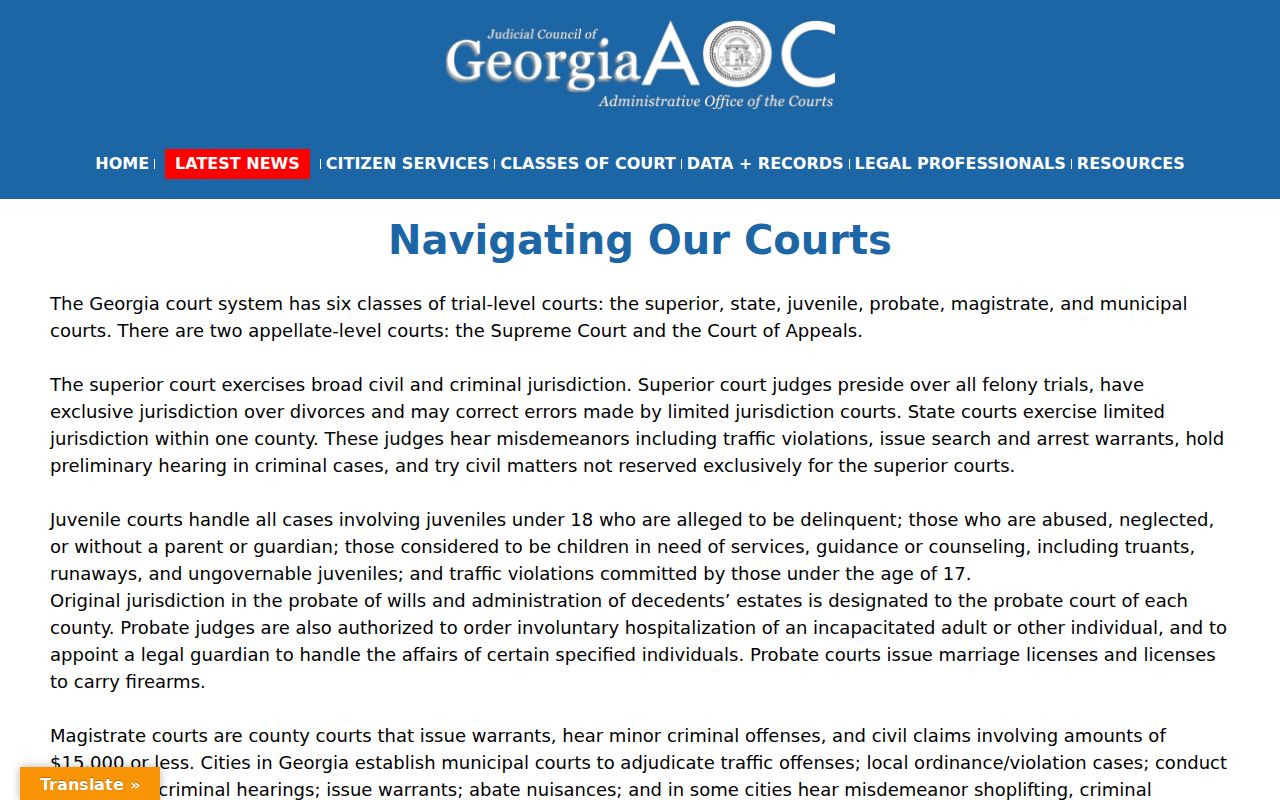
Magistrate Court is where most Franklin County warrant business begins. Probate handles county traffic and some misdemeanors; the Superior and Juvenile Courts clerk routes felony records, and city clerks keep their own municipal files.
- Issuing court
- The court that creates the warrant and controls recall.
- Serving agency
- The Sheriff, city police, marshal, or other agency that executes it.
- FTA
- Failure to appear, which can bring a bench warrant and separate DDS action.
Franklin County Warrants: Who Holds What
For enforcement and detention anywhere in Franklin County, the Sheriff sits at 1 James Little Street, with records hours Monday through Friday, 8 a.m. to 4 p.m. Warrant paperwork runs through the courts. Magistrate Court, 7085 Highway 145, Suite B, takes warrant applications, bail, preliminary matters, limited misdemeanors, and county ordinance cases. Probate Court, Suite A, covers county traffic and certain misdemeanors. Felony filings go through the Superior clerk at 9592 Lavonia Road. Each municipal clerk keeps its own traffic, ordinance, and local criminal files.
Traffic Search Limits in Franklin County
The state ticket page reports no centralized database for Franklin County or anywhere else, and points to vendor services that participating courts use.
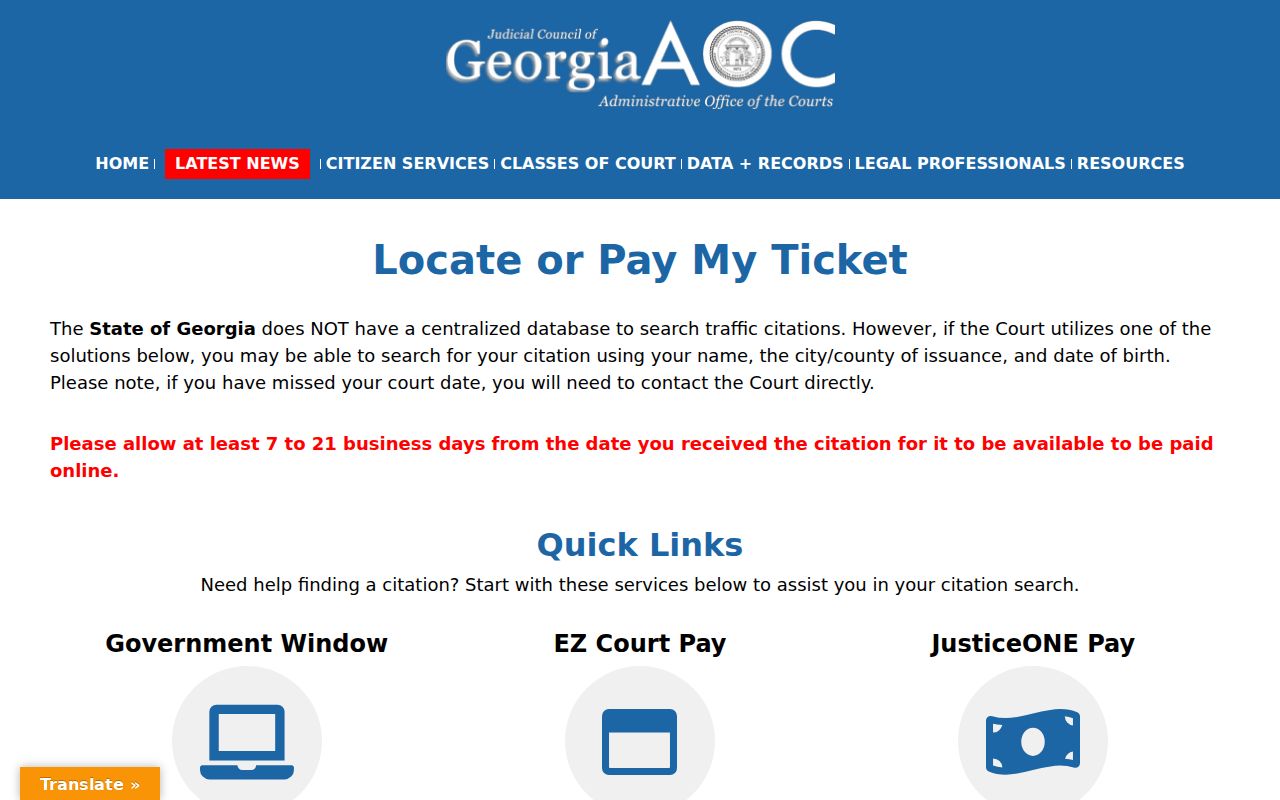
Franklin Springs links its citations to Government Window, while Canon uses JusticeONE. A vendor search may locate or pay a citation. That result proves nothing about warrants, though; a bench or arrest warrant can still exist after a missed date. Call the issuing court. County traffic cases belong to Probate Court. City citations fall to Lavonia, Royston, Franklin Springs, or Canon municipal court. Carnesville's site shows no separate municipal layer, so confirm with City Hall or the Franklin County Sheriff.
Franklin County Records-Request Route
The Sheriff's Open Records page sends requests to Records Supervisor Marcus Greer at mgreer@franklincosheriff.net, 706-384-2525, or P.O. Box 310. Describe the records you want and give contact details. Within three business days you get a notice covering which records are responsive and releasable, plus any costs. The first 15 search minutes are free, and black-and-white copies run $0.10 per page. Extra search, redaction, media, or unusual-copy fees can apply. Judicial records, though, go straight to the court, not through this Franklin County request route.
Which Warrants Stay Restricted
The Georgia Open Records Act guide recognizes exemptions. Sealed material, juvenile files, personal identifiers, and investigative records can be withheld or redacted, and newly issued process may stay out of view until served.
Access rules:
Open-records access does not override a sealing order or juvenile confidentiality.
An absent public record is not proof that Franklin County issued no warrant.
Confirm current status with the court or Sheriff.
A 2025 Franklin County Sheriff warning flagged scam callers demanding payment to settle a warrant. Hang up. Then call 706-384-2525 or the issuing court yourself, and never trust a caller's number or payment demand.
Confirm a Franklin County Match
A name match is where the work begins, not where it ends. Before you treat a record as yours, ask the responding office to check the birth date and the case or citation number. Common names cause trouble. So do incomplete dates and old files. Get the issuing court's name too. That court is the one to ask about a current appearance date, bond terms, a recall order, or anything else moving in the case. Clerk staff will explain office procedure, though they cannot pick a legal response for you. Write down what you learn: the agency, the date, the jurisdiction searched, and the exact status language used. Ask whether "active" still means the warrant can be executed, and whether "served," "recalled," "dismissed," or "cleared" matches a current court entry. Once a warrant is resolved, ask for a receipt, order, release letter, or clerk confirmation when one is available. A vendor payment screen and a DDS reinstatement record answer different questions. Neither one replaces court confirmation. If the Sheriff finds no county entry, keep going with the court tied to the event. A Lavonia, Royston, Franklin Springs, or Canon citation may sit with a municipal court. Carnesville questions may call for City Hall and the Sheriff both. A felony filing runs through the Superior Court clerk, and a warrant application may begin in Magistrate Court. That second check matters, since Franklin County has no public portal merging all venues.
Prepare a Franklin County Warrant Request
A narrow request beats a demand for everything tied to a name. Say which office you are asking, describe the event or case, give a useful date range, and state whether you want a warrant entry, incident report, docket, return, or recall order. The Sheriff's blank request form is simple. It asks for the date, a description of the records, and your name and contact information. No public warrant-search checkbox appears on it, and no government identification field is required on the blank form. Send Sheriff requests to the published records custodian rather than an unrelated county employee, since misrouting slows the answer. For judicial records, ask the municipal or county court directly. If an office says material is withheld, ask for the legal basis and whether a redacted record or public docket entry can be supplied instead. A records response tells you what releasable documents that office holds. It is not a live safety clearance, not legal advice, and not a complete search across Franklin County's separate courts. Keep the response with its date and office name. If your goal is resolving a possible warrant, follow the paperwork with same-day confirmation from the issuing court or the Sheriff. Records can document an earlier event while an operational system reflects a later service, recall, or return, so both pieces matter in Franklin County.
Franklin County Warrant Channels Compared
Each channel in Franklin County answers a different question. The records custodian reviews existing Sheriff documents for possible release and may need time to search or redact them. A court clerk looks at that court's file and can explain its current administrative entry. Sheriff staff handle county law-enforcement information. A city clerk handles a municipal case. None of these is a complete statewide warrant search, so pick the channel by the event that started the matter; that keeps the question narrow and gives the responder a real chance of finding the right file. When you write the request, skip broad phrases like all information. Name the likely record, the date, the agency, and the case or citation number. Ask for an electronic copy when that is practical, and request a cost estimate before any large search begins. If you only need to learn where a case belongs, a short call may spare you a formal request. When identity details are required, send them through the official channel rather than social media, an unverified text, or a caller-provided payment site. Expect a court reply and a Sheriff reply to differ honestly, because they answer different questions. Record both dates, then ask the issuing court which entry controls the next step.